🧱 Destination: Rotterdam | Innovation meets Heritage 🌊
📍🏙️ Rotterdam Reimagined: A Modern Metropolis Adventure 🇳🇱
⚓ Port City Pulse: Catching the Vibe of Rotterdam 🚲
Leaving the historic canals and leaning houses of Amsterdam behind 🚂💨. We are trading the Old World charm for 3 days of pure innovation, futuristic architecture, and high-energy harbor vibes in Rotterdam! 🏙️✨ From gravity-defying cube houses to cutting-edge food markets, it's time to see the modern side of the Netherlands. 🇳🇱🙌
Rotterdam day 1
- Rotterdam Centraal
- Oude Westen
- Dijkzigt
- Coolhaven
- Veerhaven
- Stadsdriehoek
- Parkhaven
- Delfshaven
We officially checked out of Amsterdam and rolled our bags into Amsterdam Centraal. Honestly, the Dutch train system deserves an award. It’s incredibly easy to navigate, completely reasonably priced, and zero stress. We booked the Intercity Direct, which felt like a total life hack—it bypasses the extra stops and gets you down to Rotterdam Centraal in a crisp 40 minutes. Stepping out of Rotterdam Centraal is like instantly fast-forwarding fifty years into the future. The station itself is this massive, sharp, metallic canopy that sets the tone for the whole city. We didn’t have to drag our luggage far at all—our base camp for the next three days is literally a few steps from the station at Hotel Not Hotel. If you haven't been, the name is literal. It doesn't feel like a hotel; it feels like an art gallery where you happen to sleep. The rooms are hidden inside actual works of art—you might sleep behind a secret bookcase, inside a vintage tram cart, or up a quirky ladder. Dropped the bags, took in the eccentric vibes, and we're officially ready to explore! ⚠️ The Real Talk Room Check 📐🛌 A quick heads-up on the living situation: while the design is incredibly cool and eccentric, these spaces are tiny. If you have a lot of luggage, it's going to be a game of Tetris. The bed is pushed completely flush against the wall, meaning there is zero clearance on one side, so navigating around each other or getting out of bed in the middle of the night takes a bit of strategy and agility!
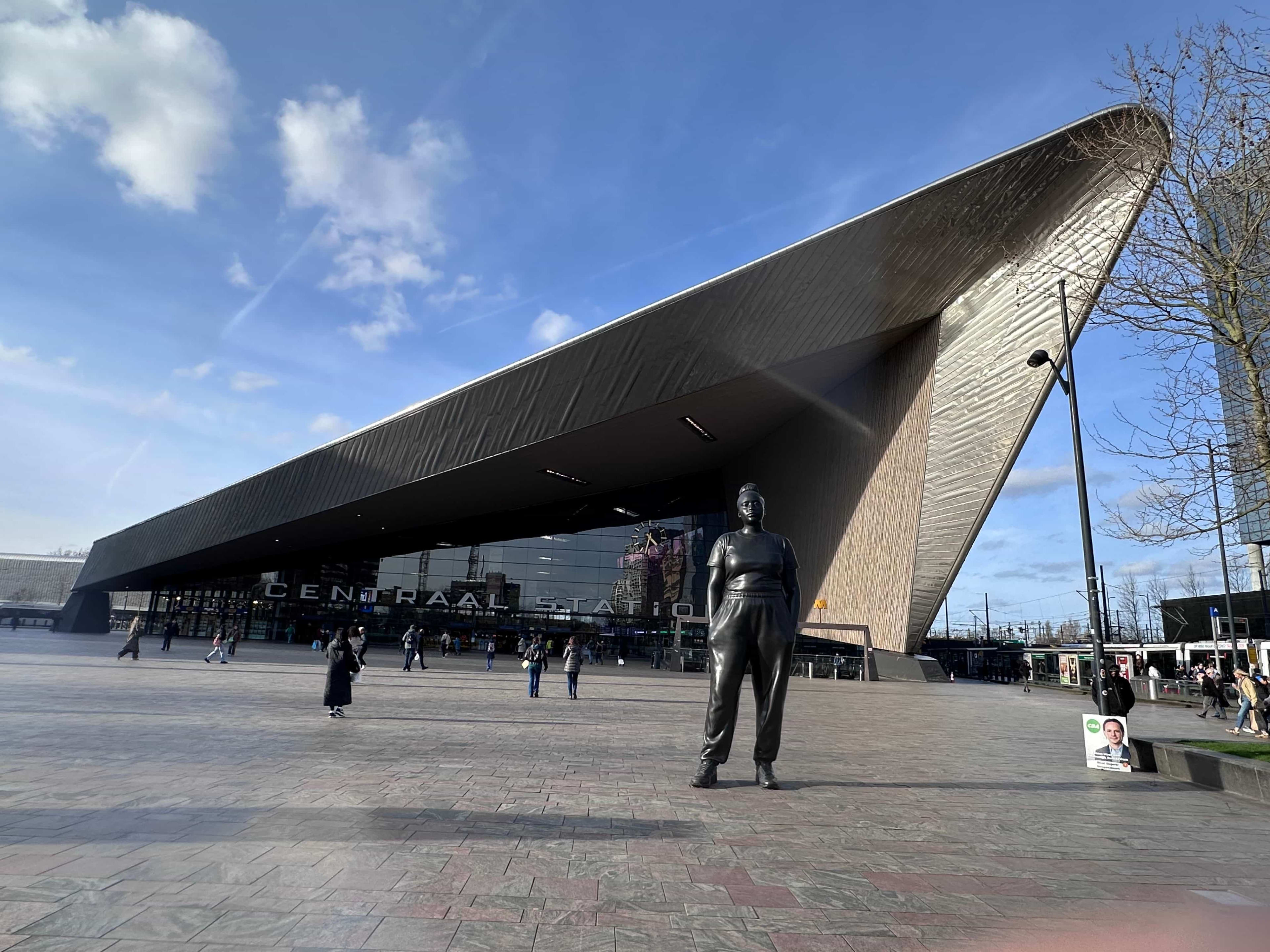
Rotterdam Centraal is less like a traditional train station and more like a soaring architectural wave. Its most striking feature is the massive, angular stainless-steel roof that points like a giant arrow straight toward the heart of the city. Stepping outside, the pedestrian-only plaza out front is paved in the same red stone as the station's interior. Directly facing the station is a skyline of hyper-modern glass skyscrapers, and lively cafes along the broad Weena boulevard.
🚶♂️ Strolling Oude Westen: Rotterdam’s Coolest Cultural Mosaic
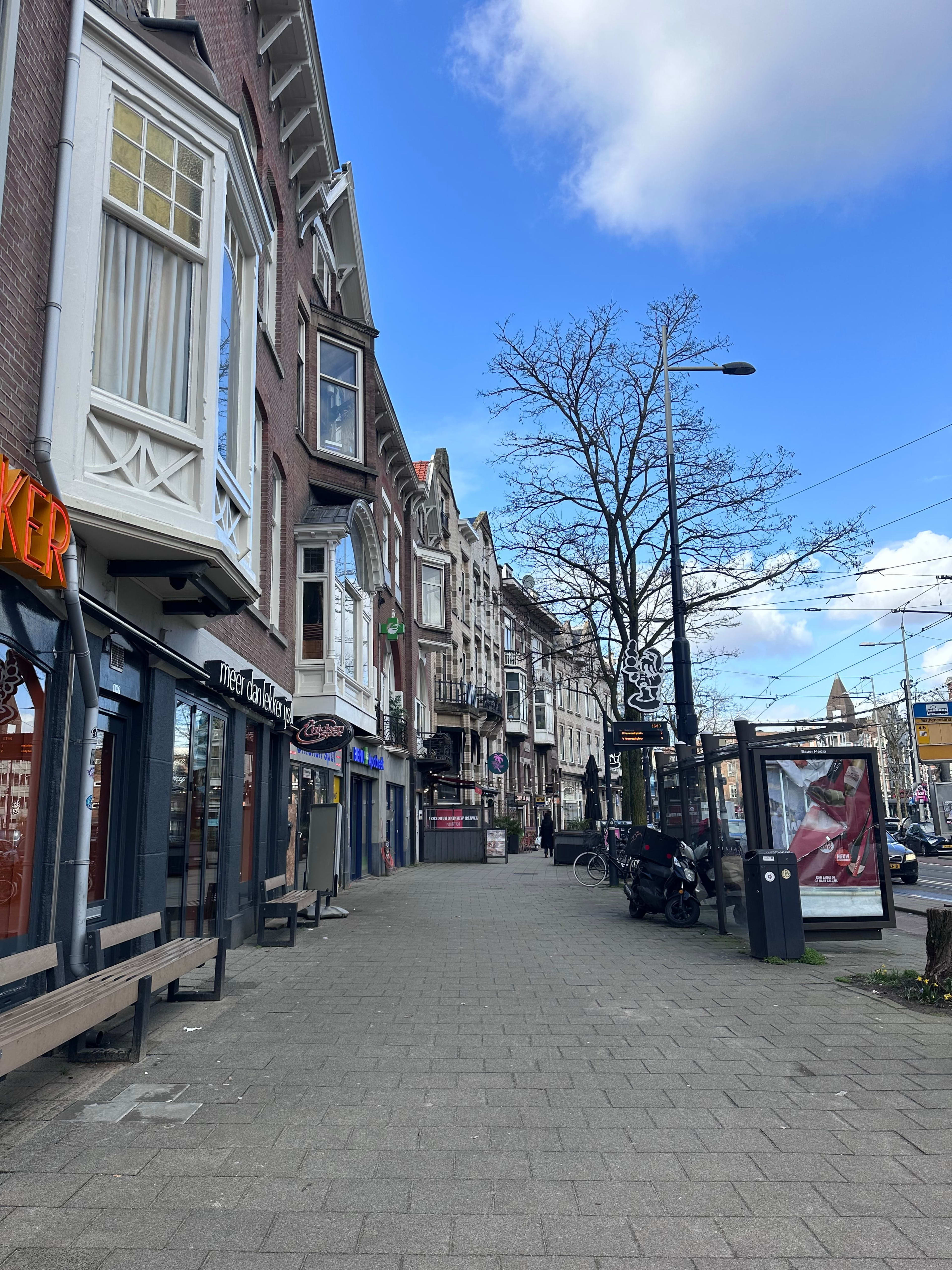
If you want to step away from the hyper-modern glass skyscrapers for a minute and find where Rotterdam’s real, local heartbeat is, you have to spend an afternoon wandering through Oude Westen (Old West). The Vibe Shift 🌍 Walking onto the main stretch here feels like a sudden, cultural plot twist. The neighborhood has this incredible, lively energy where traditional Dutch architecture meets a bustling global marketplace. You'll instantly notice a massive shift in the storefronts—shops feature Arabic signs, Middle Eastern grocery markets, and bakeries pumping out the sweet smell of fresh baklava. The Food Scene 🧆 This is the absolute best spot in the city to follow your nose.
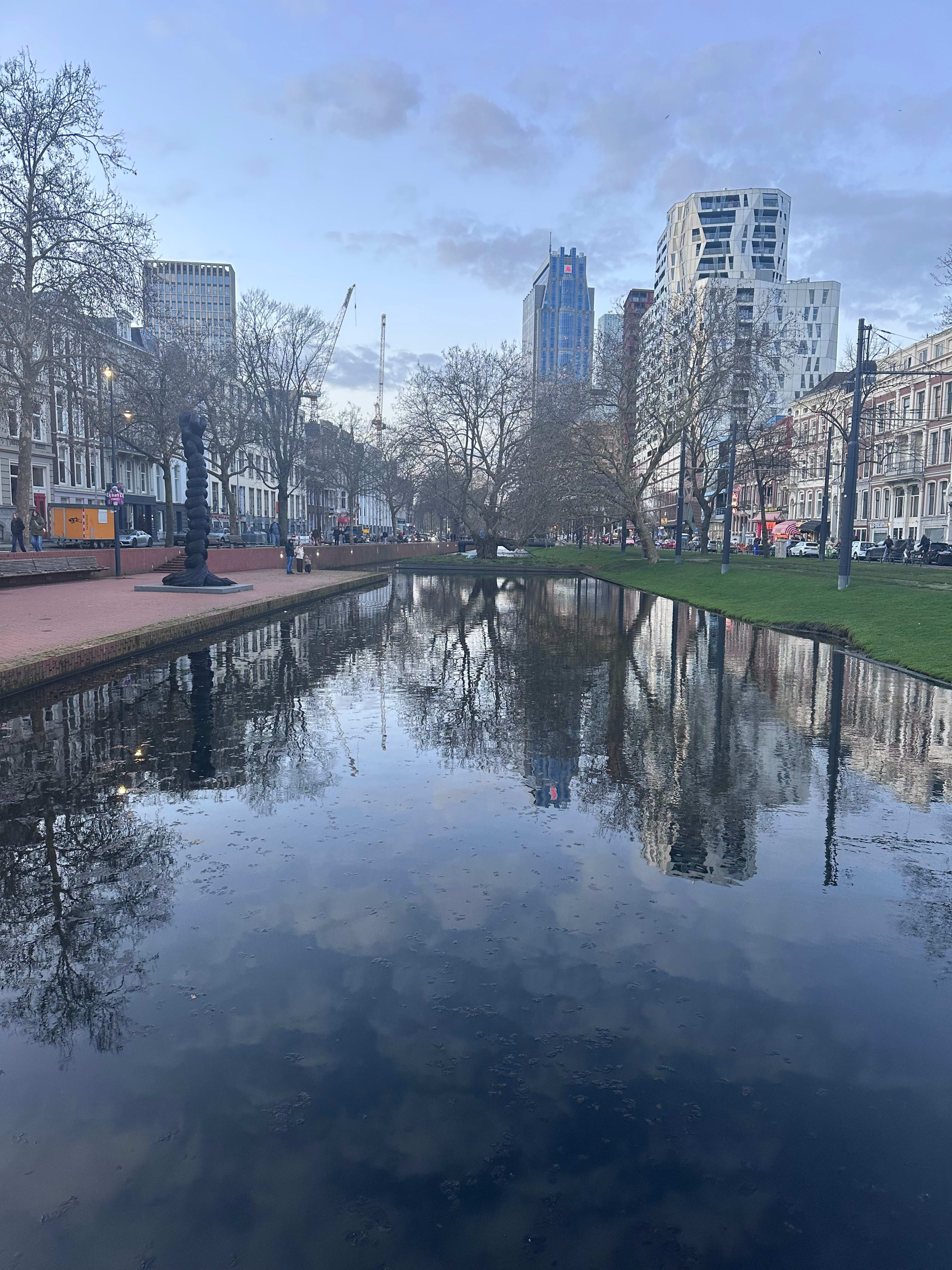
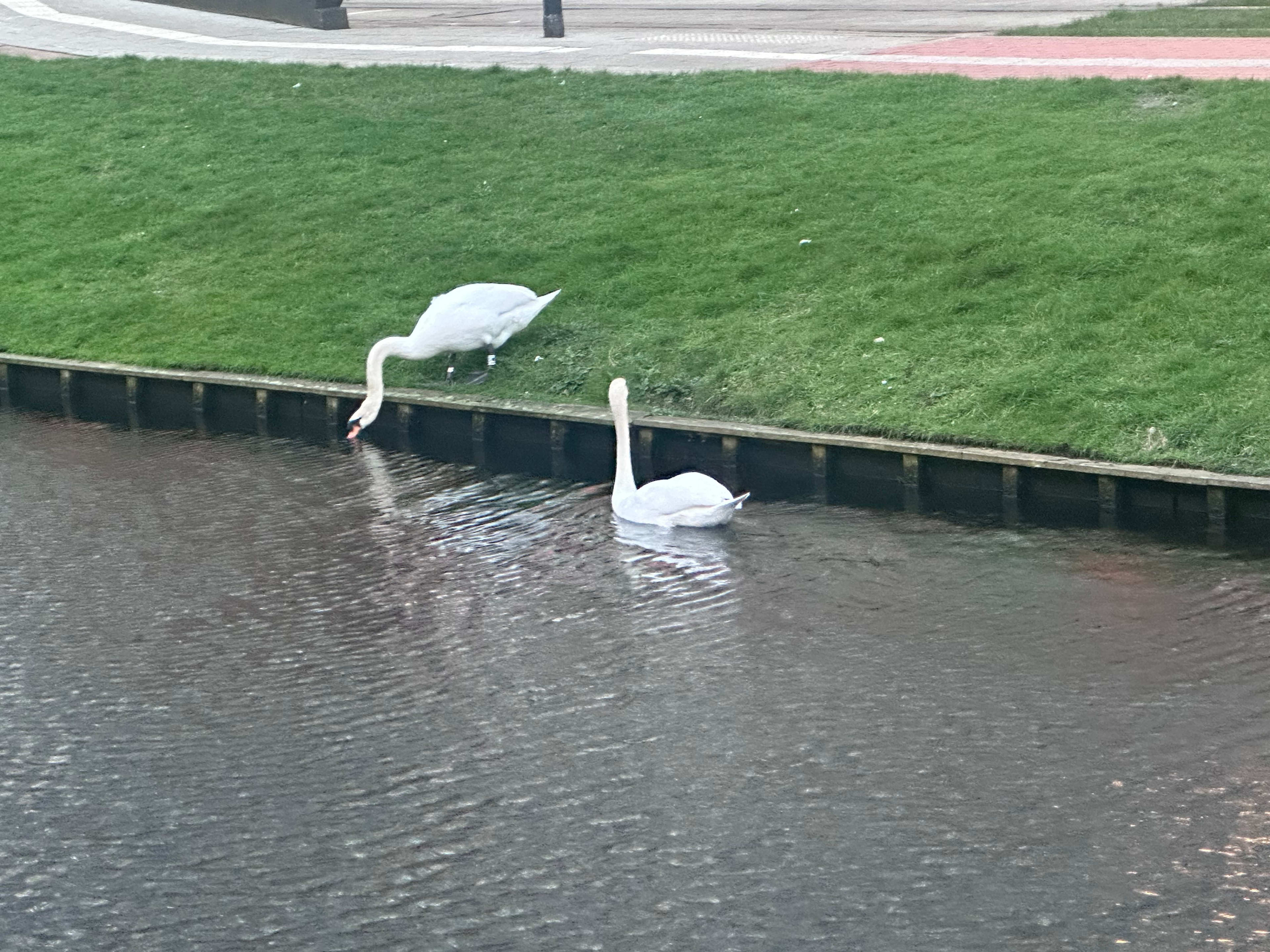
🍃 Walking along the water here is pure bliss. It’s lined with massive trees that dip right into the canal, green grassy banks perfect for a quick afternoon rest, and plenty of local ducks and swans swimming by.
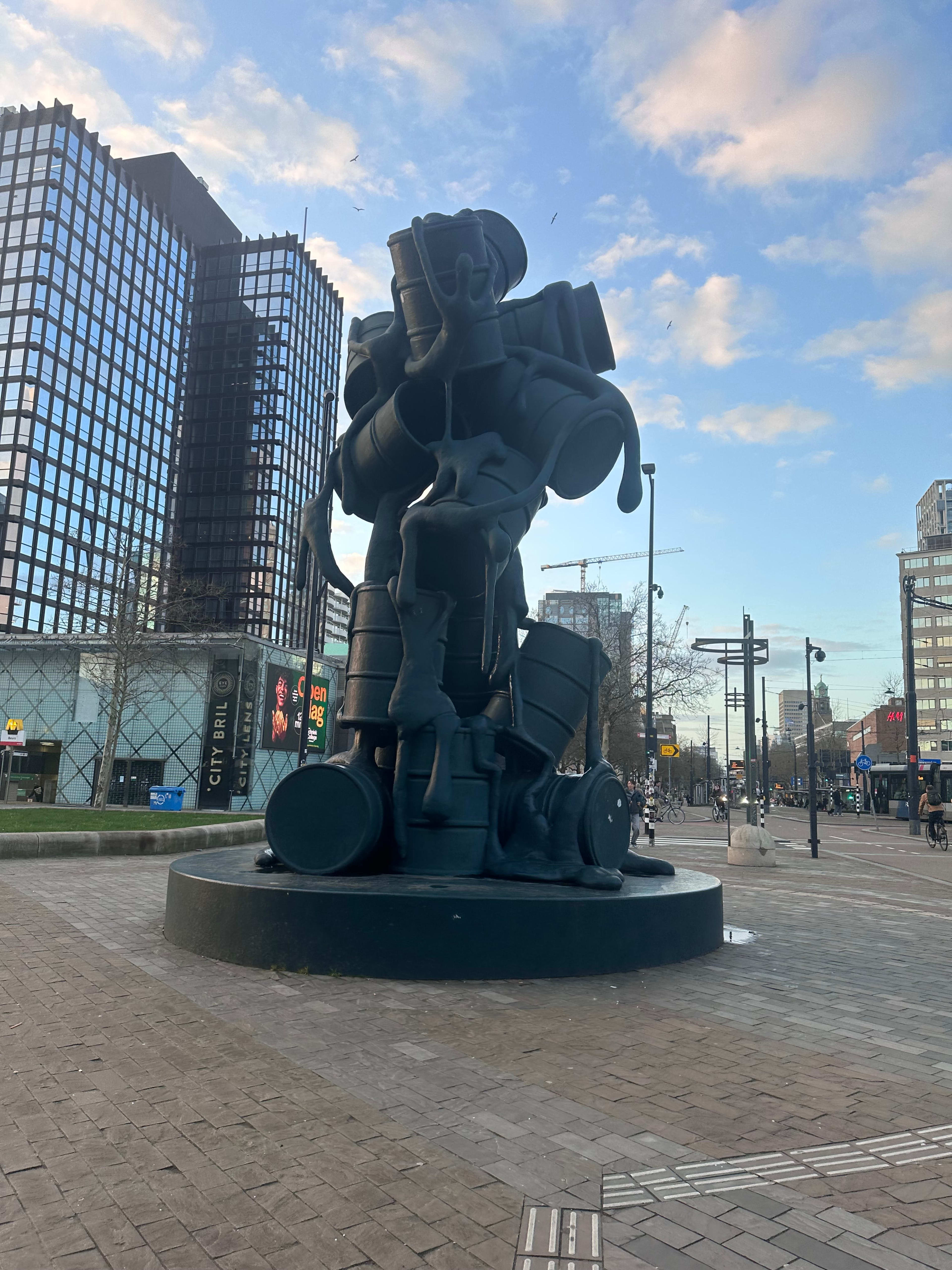
🎨 As you edge closer to the center, the canal turns into an open-air art gallery. Keep your eyes peeled for incredible, world-class sculptures scattered right along the water's edge.🚪 If you peek down some of the side residential streets, you might catch a glimpse of the historic, hidden inner courtyards. They are peaceful, shared green spaces tucked away behind the brick apartment fronts.
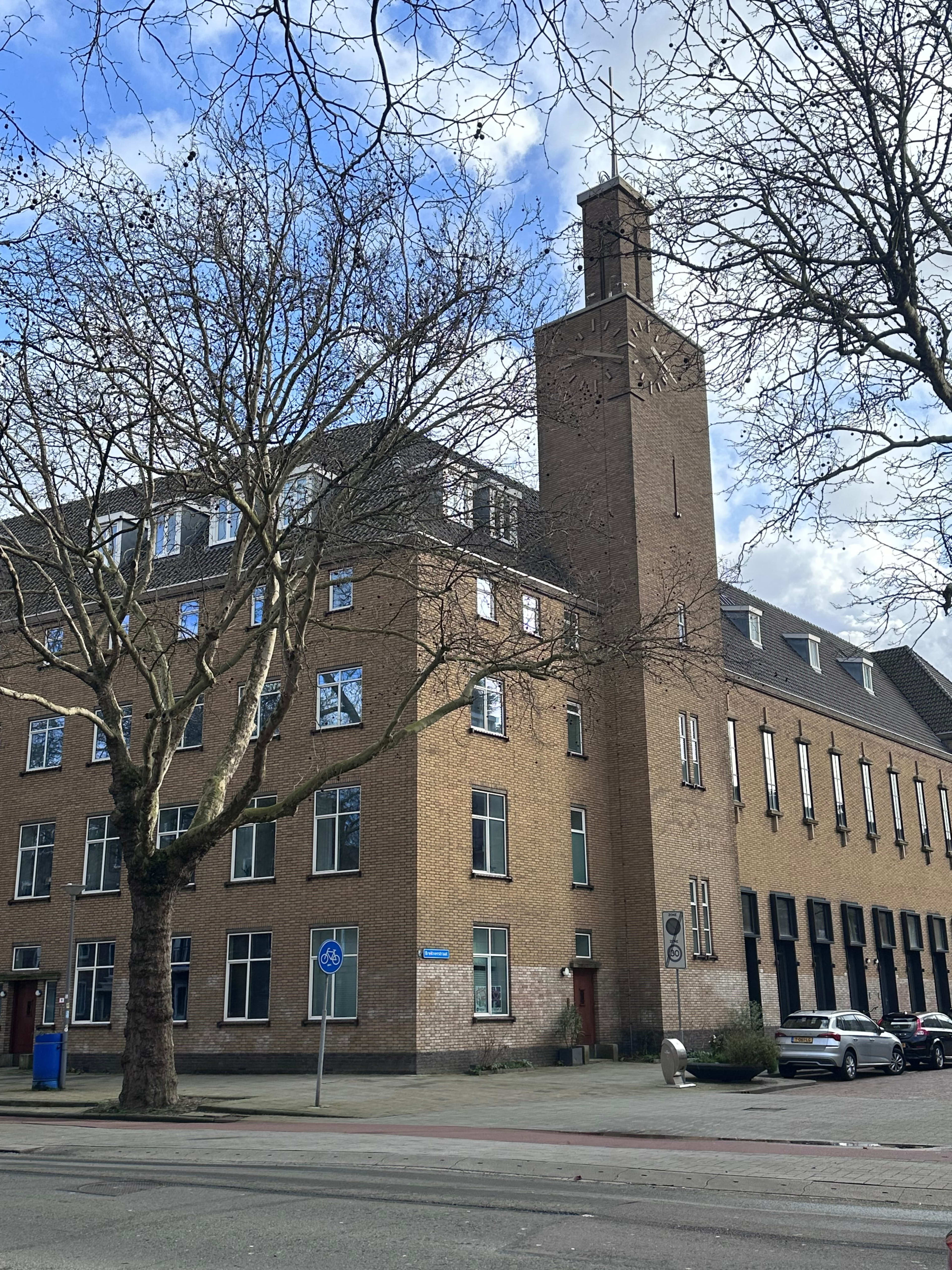
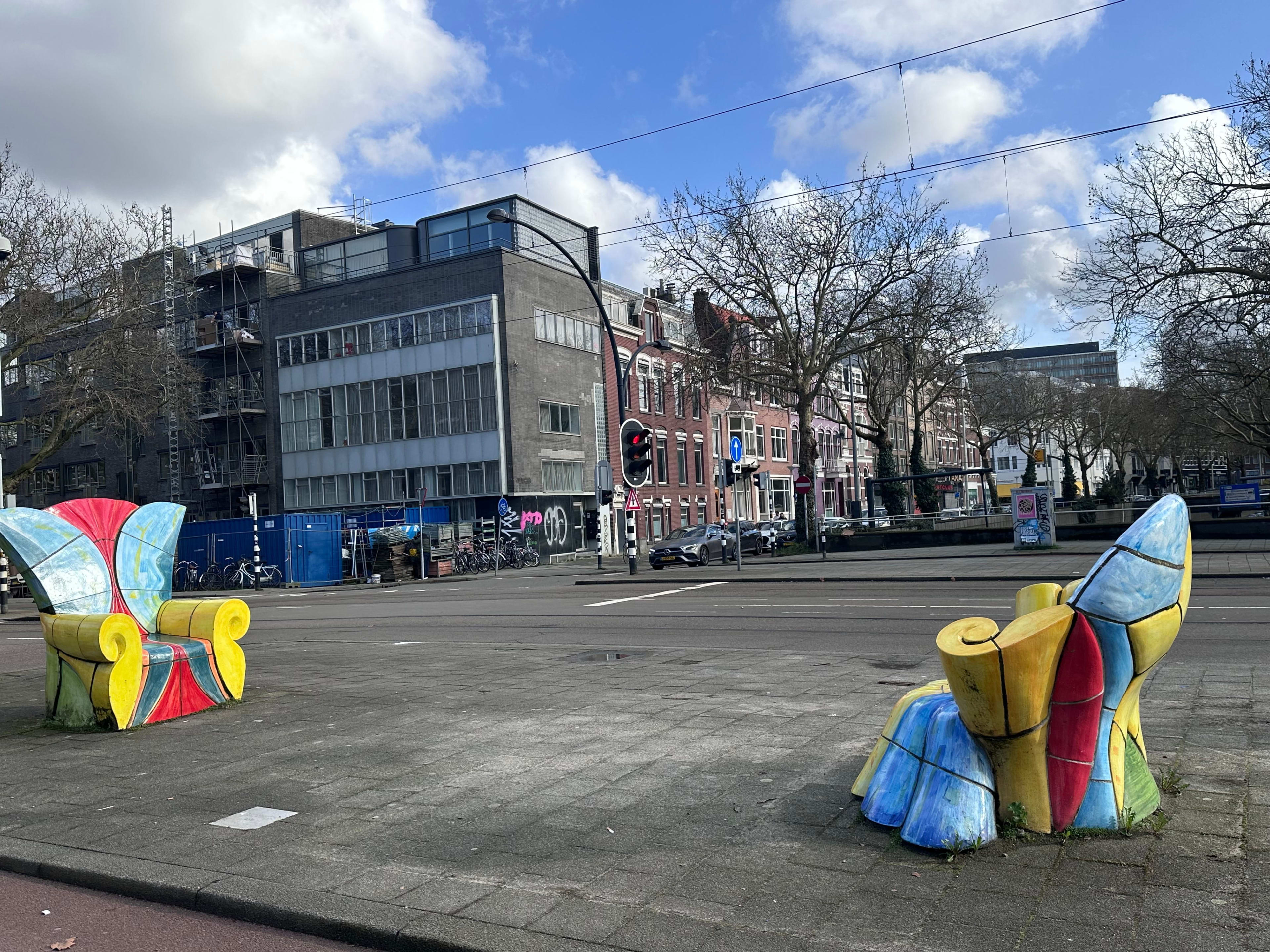
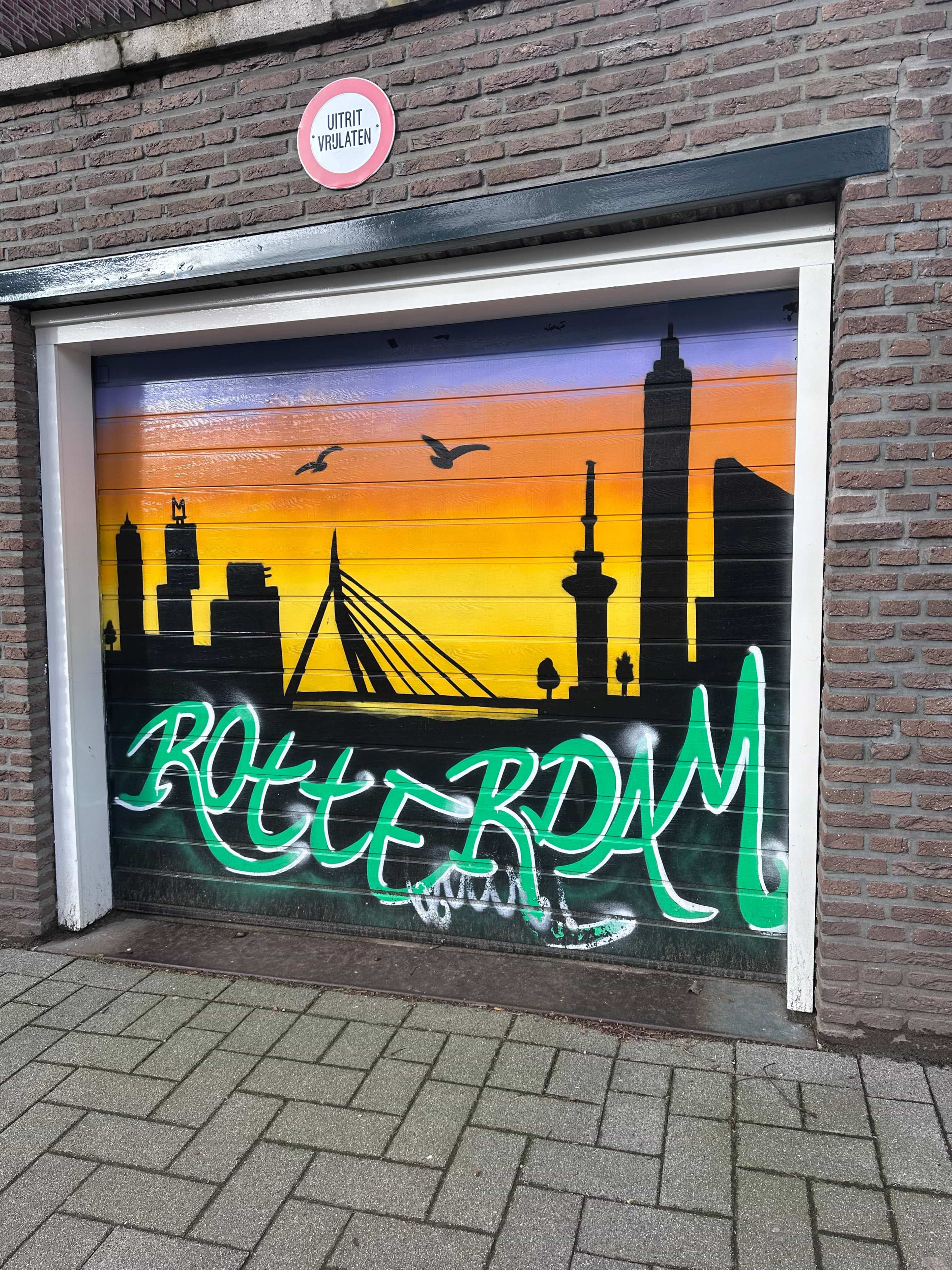
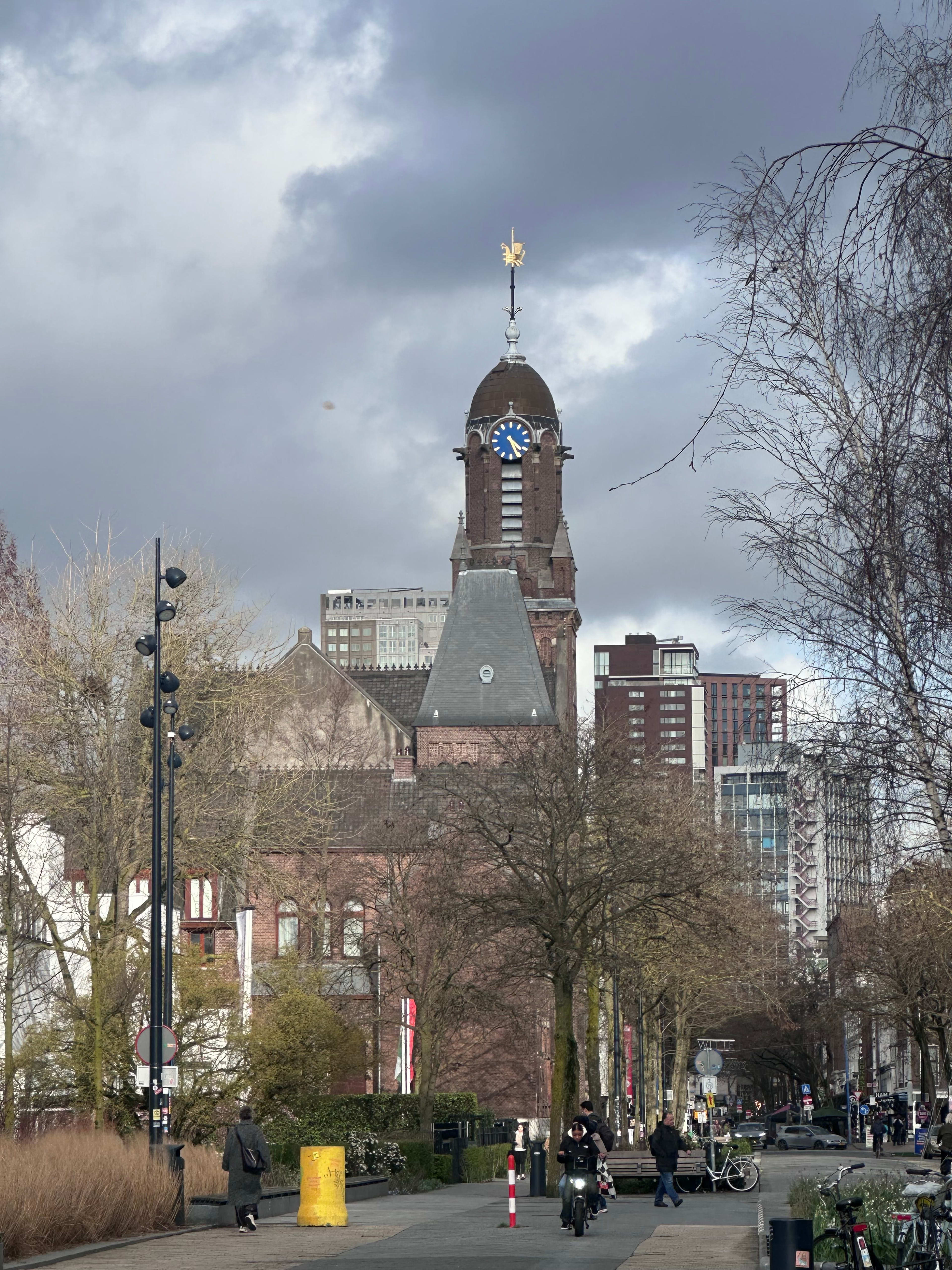
Head southwest of the city center into Dijkzigt. While many locals know it primarily as the city’s massive medical district, it is actually a super interesting, breezy neighborhood that bridges the gap between cutting-edge science and Rotterdam's world-class museum scene. 🌳 Despite being a major clinical hub, the neighborhood is beautifully landscaped with wide, tree-lined walking paths, modern plazas, and plenty of open green spaces where people sit outside to grab lunch or catch some sun. 🖼️ The absolute best part about wandering through Dijkzigt is that it sits right on the edge of Museumpark. You can literally walk off a hospital plaza and instantly find yourself surrounded by some of the best art and culture in Europe. 🔮 Right on the neighborhood border, you cannot miss the Depot Boijmans Van Beuningen. It’s that famous, giant reflective bowl covered in mirrors. Walking past it is always a trip because the building completely reflects the surrounding trees and the moving Rotterdam sky. It’s the ultimate photo spot!
☕ If you need a quick break, the indoor public spaces and cafes inside the main Erasmus MC buildings are surprisingly beautiful, flooded with natural light, and feel more like a futuristic airport terminal than a hospital.
1 / 8
⚓ Coolhaven: Rotterdam’s Edgy, Creative Waterfront
If you want to experience the absolute coolest side of Rotterdam’s architectural rebirth, you need to head over to Coolhaven. Tucked right between the museum district and the historic streets of Delfshaven, where a thriving creative subculture. 🏗️ Coolhaven was heavily bombed during World War II, so instead of traditional Dutch houses, you get a dramatic waterfront lined with massive, repurposed brick warehouses and striking new high-rises. It feels incredibly spacious because the wide water basins open the whole neighborhood up to the sky. 🎨 This is where Rotterdam’s young creatives hang out because the Rotterdam Academy of Architecture and several art spaces are right there.
🌊 Walking the Waterfront & The Cool Canal
🚶♂️ Walking right along the Coolhaven waterfront basin is the best way to take it all in. 🌉 You’ll get a fantastic view of the Pieter de Hoochbrug, a massive, classic Dutch bascule bridge (the kind that splits and opens up for massive ships) where you can watch a giant cargo boat or a historic barge glide right through the middle of the neighborhood (☀️Check my Instagram of the rising bridge)
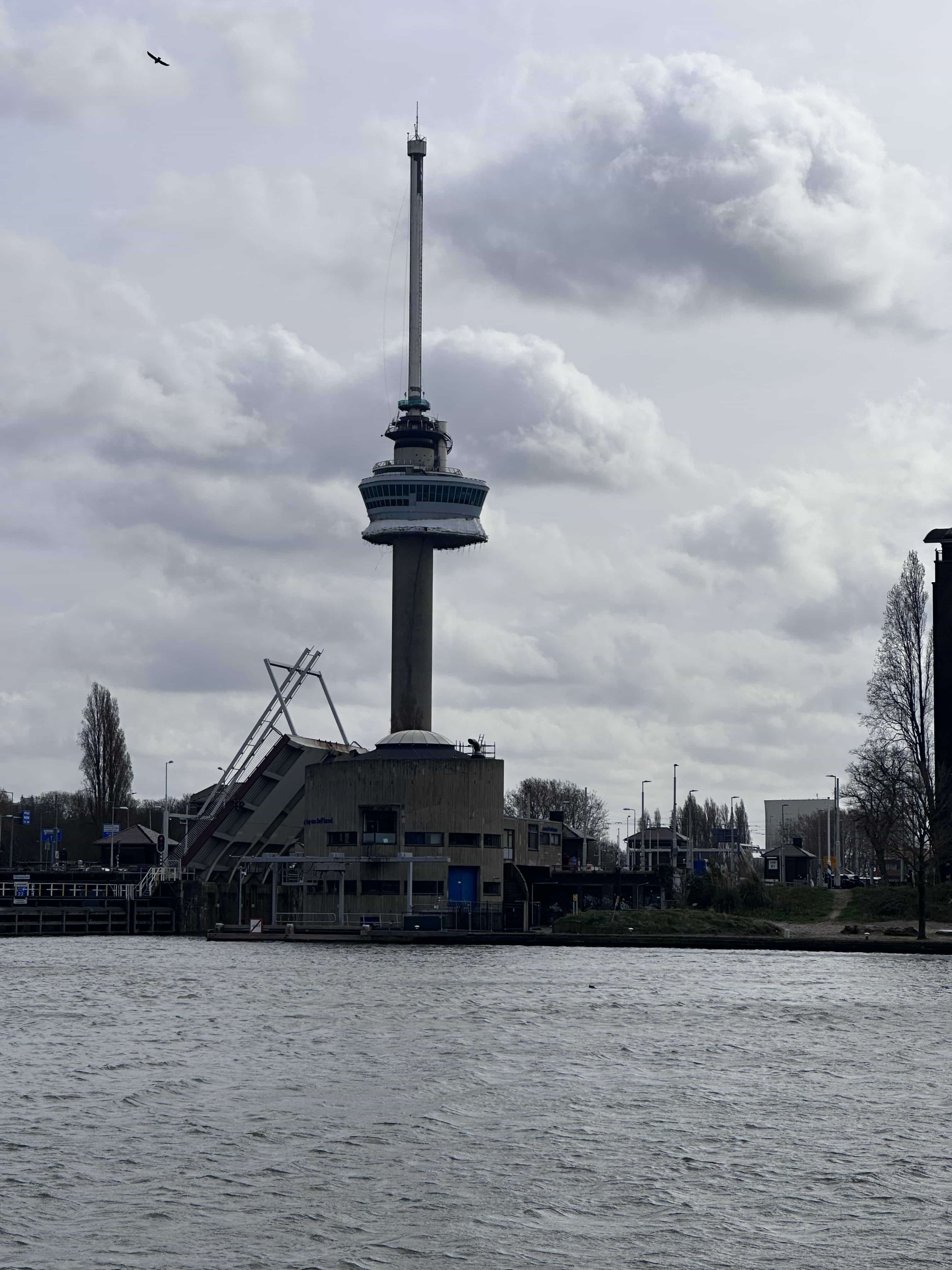
📸 For an incredible photo that most tourists completely miss, stand on the northern side of the Coolhaven basin looking southeast. You get a perfectly framed shot of the hyper-modern Erasmus MC towers and the iconic Euromast spearheading the sky right over the water. It’s stunning around sunset.
☕ Skip the crowded cafes in the city center and head to Machinist. It’s a hip restaurant and cultural venue housed inside a stunning, converted 1940s marine engineer school right on the water. Grab a local craft beer or a coffee on their outdoor terrace—it’s the ultimate local hangout.
🏢 Don't miss walking through Little C, a newly developed pocket of Coolhaven. The architects designed it to look like a slice of New York's Greenwich Village or DUMBO—think industrial brick buildings, black steel fire escapes, and leafy pedestrian alleyways. It’s a total architectural plot twist in the middle of the city.
⚓ Coolhaven: Rotterdam’s Edgy, Creative Waterfront
If you want to experience the absolute coolest side of Rotterdam’s architectural rebirth, you need to head over to Coolhaven. Tucked right between the museum district and the historic streets of Delfshaven, where a thriving creative subculture. 🏗️ Coolhaven was heavily bombed during World War II, so instead of traditional Dutch houses, you get a dramatic waterfront lined with massive, repurposed brick warehouses and striking new high-rises. It feels incredibly spacious because the wide water basins open the whole neighborhood up to the sky. 🎨 This is where Rotterdam’s young creatives hang out because the Rotterdam Academy of Architecture and several art spaces are right there.
🌊 Walking the Waterfront & The Cool Canal
🚶♂️ Walking right along the Coolhaven waterfront basin is the best way to take it all in. 🌉 You’ll get a fantastic view of the Pieter de Hoochbrug, a massive, classic Dutch bascule bridge (the kind that splits and opens up for massive ships) where you can watch a giant cargo boat or a historic barge glide right through the middle of the neighborhood (☀️Check my Instagram of the rising bridge)
📸 For an incredible photo that most tourists completely miss, stand on the northern side of the Coolhaven basin looking southeast. You get a perfectly framed shot of the hyper-modern Erasmus MC towers and the iconic Euromast spearheading the sky right over the water. It’s stunning around sunset.
☕ Skip the crowded cafes in the city center and head to Machinist. It’s a hip restaurant and cultural venue housed inside a stunning, converted 1940s marine engineer school right on the water. Grab a local craft beer or a coffee on their outdoor terrace—it’s the ultimate local hangout.
🏢 Don't miss walking through Little C, a newly developed pocket of Coolhaven. The architects designed it to look like a slice of New York's Greenwich Village or DUMBO—think industrial brick buildings, black steel fire escapes, and leafy pedestrian alleyways. It’s a total architectural plot twist in the middle of the city.
⚓ Veerhaven: Rotterdam’s Elegant, Old-World Maritime Escape
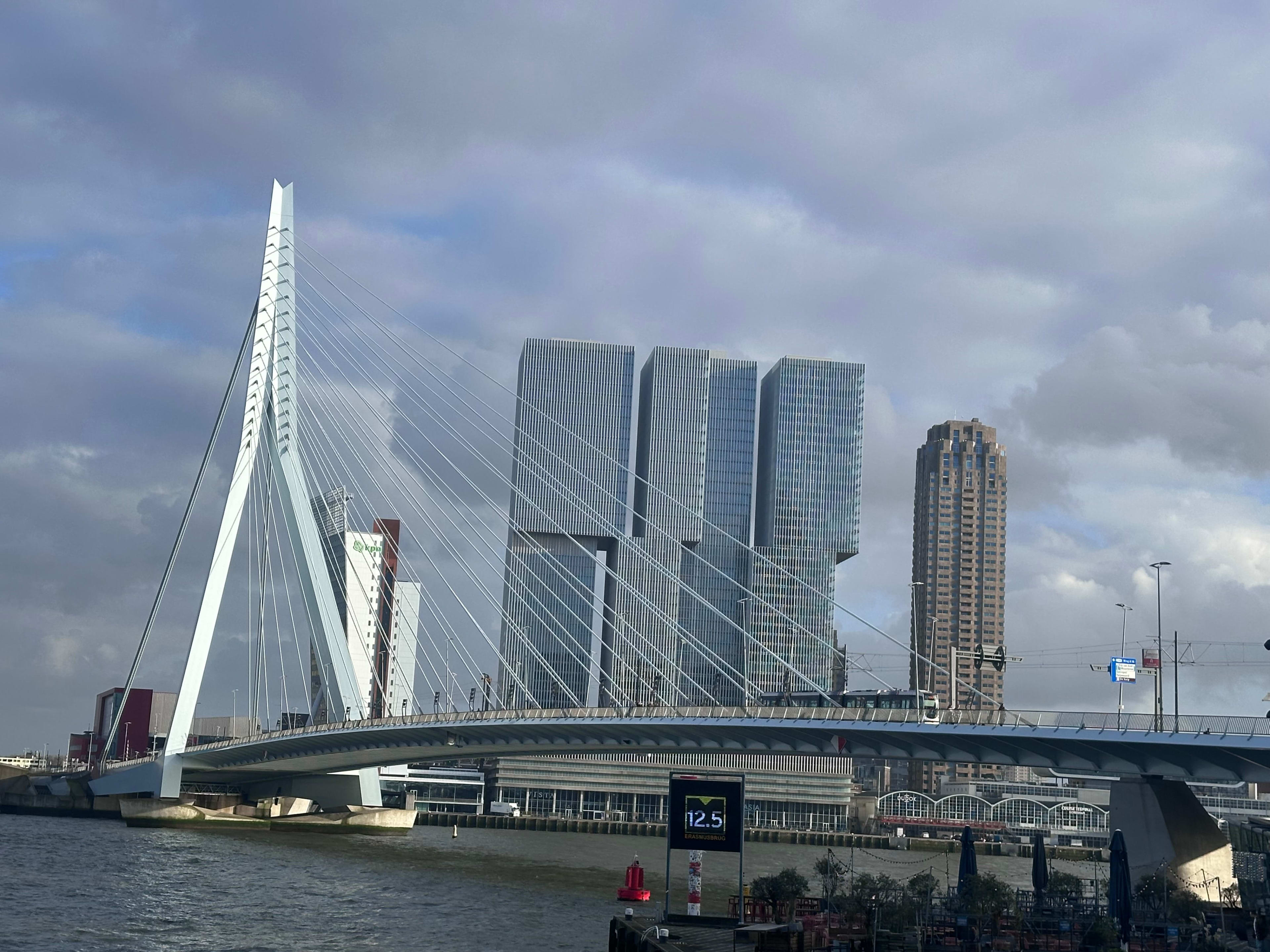
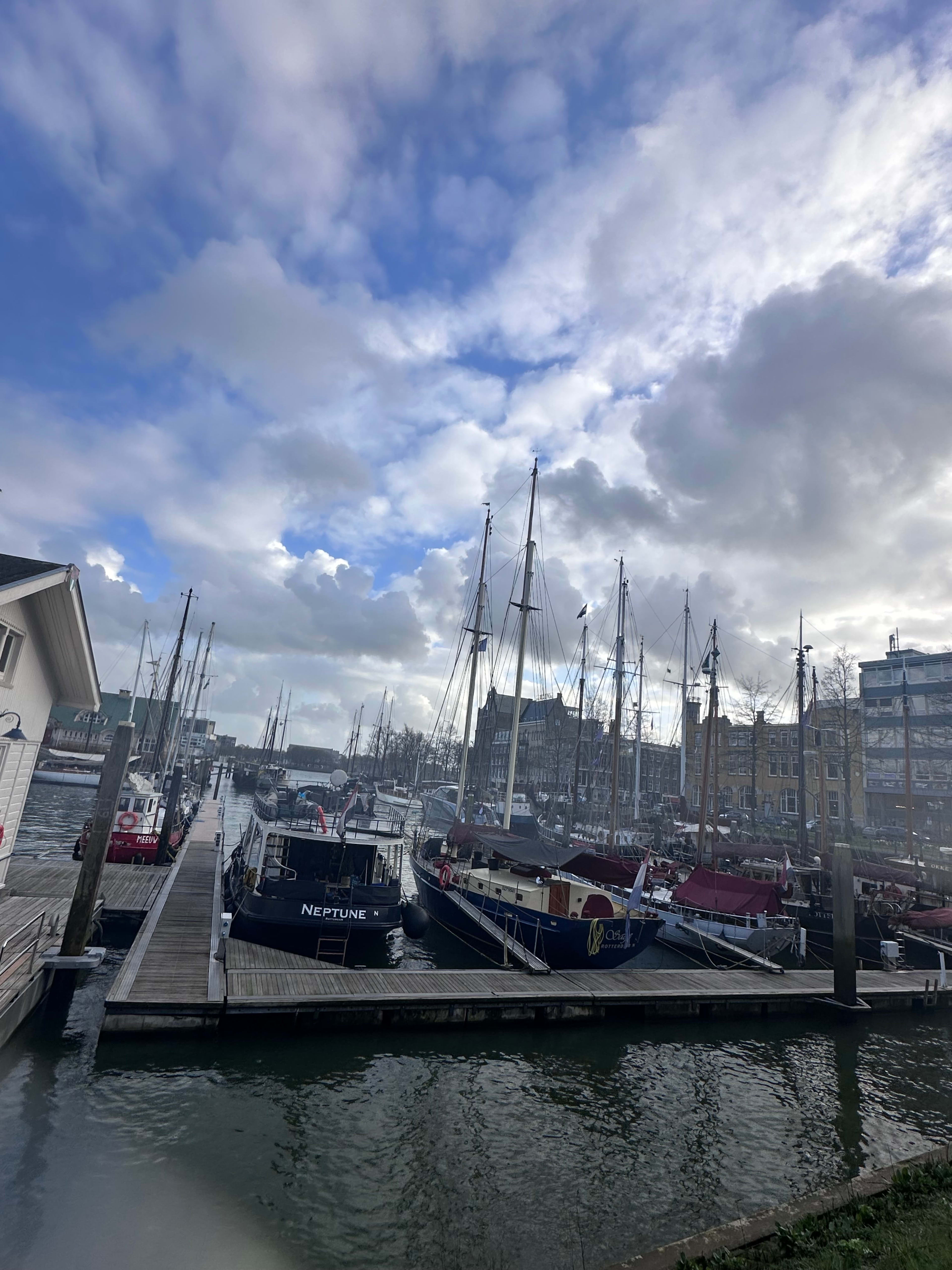
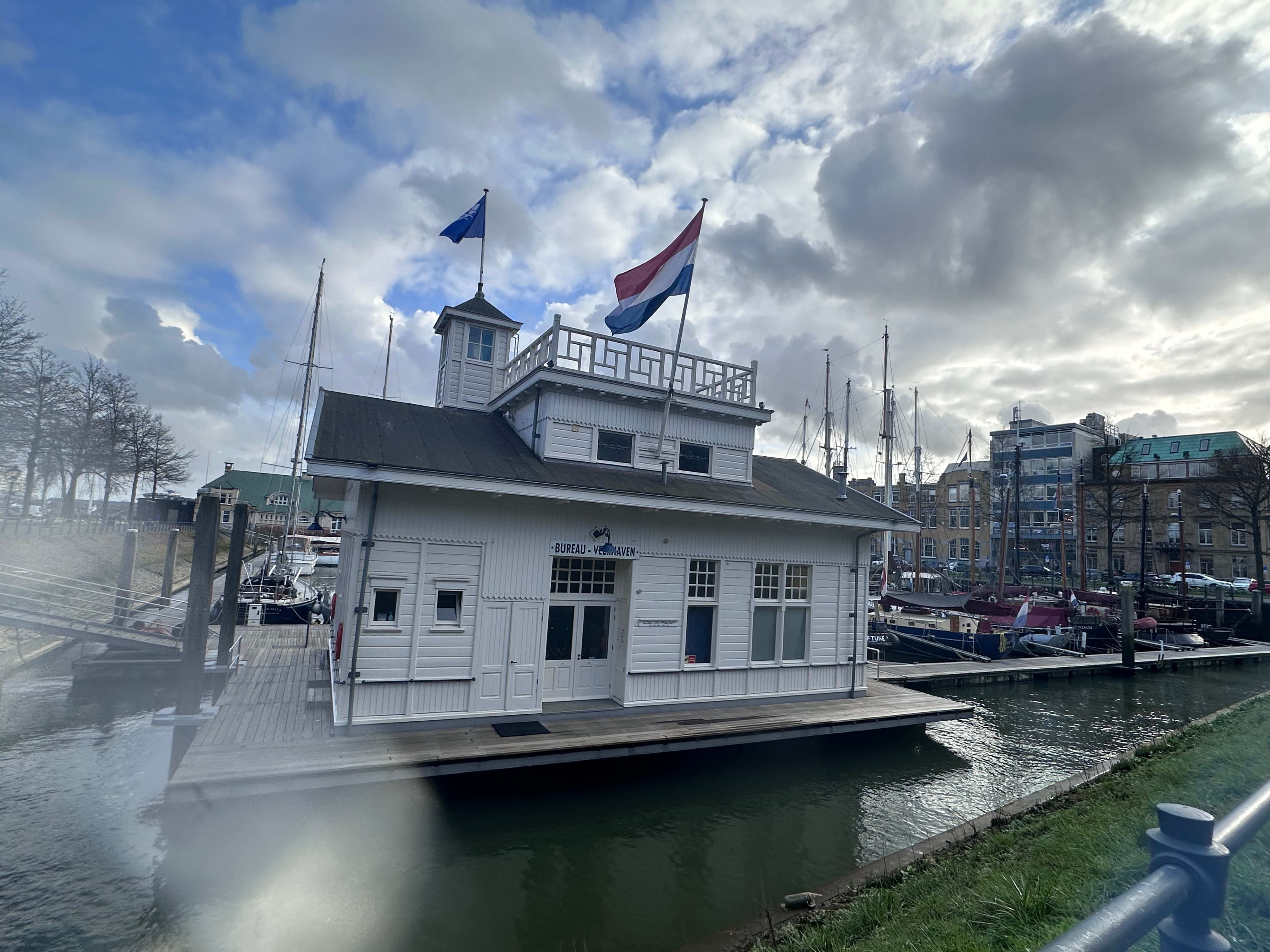
If you want a complete break from Rotterdam's hyper-modern skyscrapers, you need to head down to Veerhaven. Tucked away in the historic Shipping Quarter, this gorgeous little harbor is like a time capsule. It is one of the very few pockets of the city that completely survived the WWII bombings, giving you a rare, beautiful look at Rotterdam’s wealthy 19th-century maritime golden age. ⛵ Instead of industrial cargo container ships, the basin is filled with beautifully restored, historic wooden sailing yachts and traditional iron-hulled boats. The harbor is ringed by elegant, grand mansions built by wealthy shipping merchants back in the 1800s, complete with cobblestone streets and shady, mature trees. 🏙️ What makes Veerhaven so magical is the juxtaposition. You can sit on a bench surrounded by 19th-century heritage, see the soaring white cables of the Erasmus Bridge and the ultra-sleek skyscrapers across the Maas River. 🚶♀️ Walk the loop around the harbor. 🌷 Just a few steps from the harbor basin is Het Park, a massive, English-landscape-style park right underneath the Euromast. It's full of winding paths, little lakes, and centuries-old trees—perfect for continuing your breezy, peaceful walk.
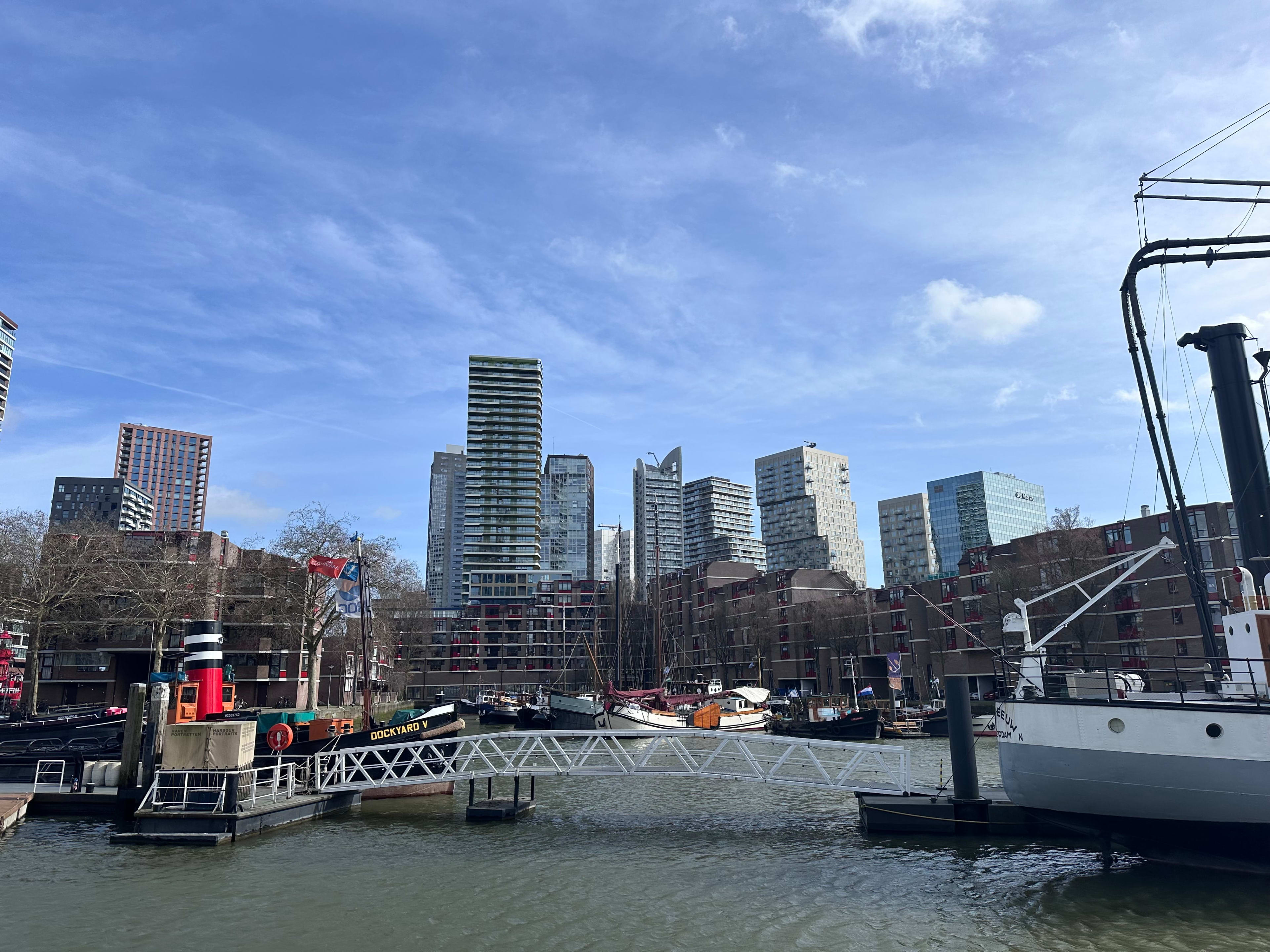
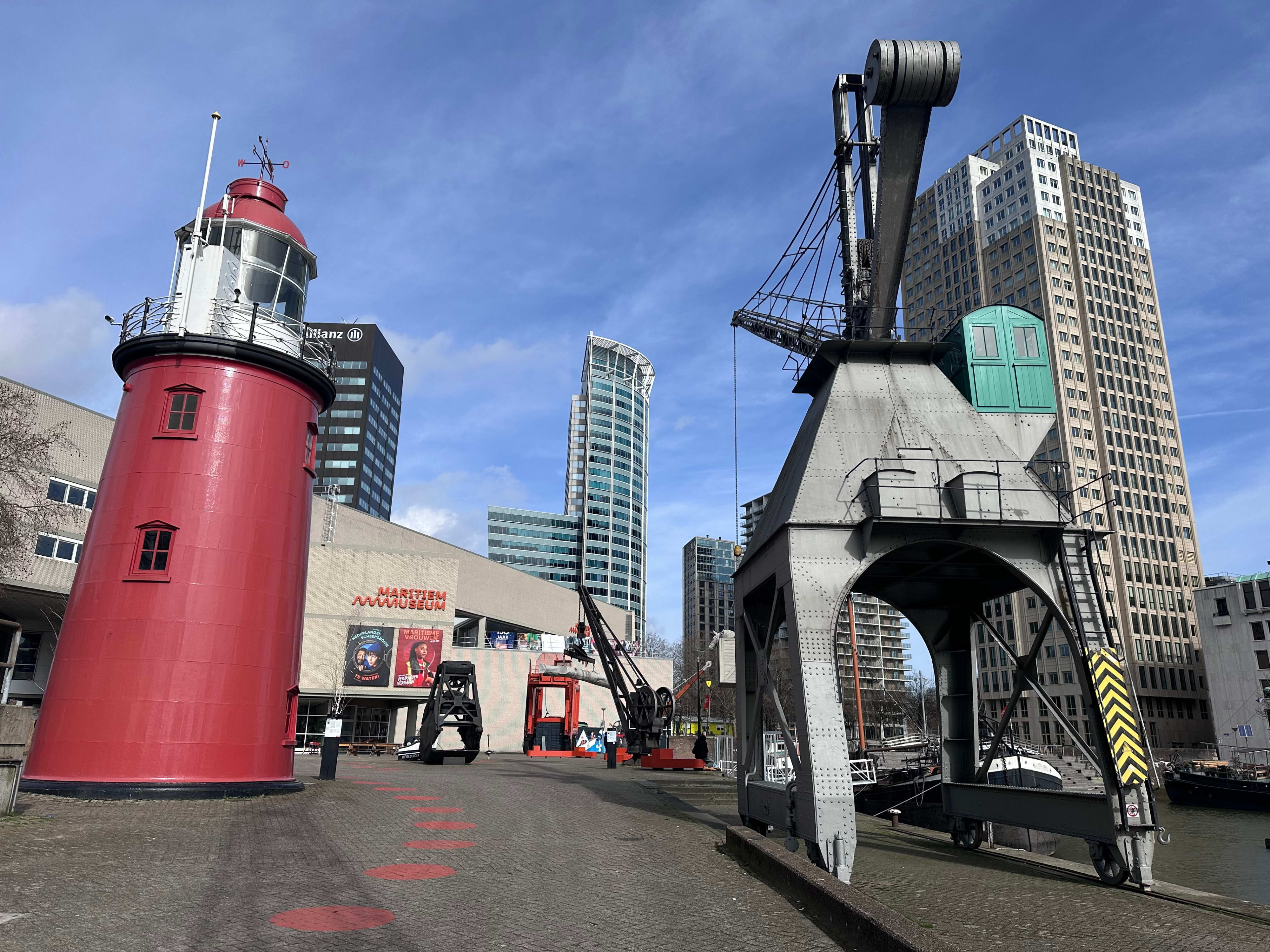
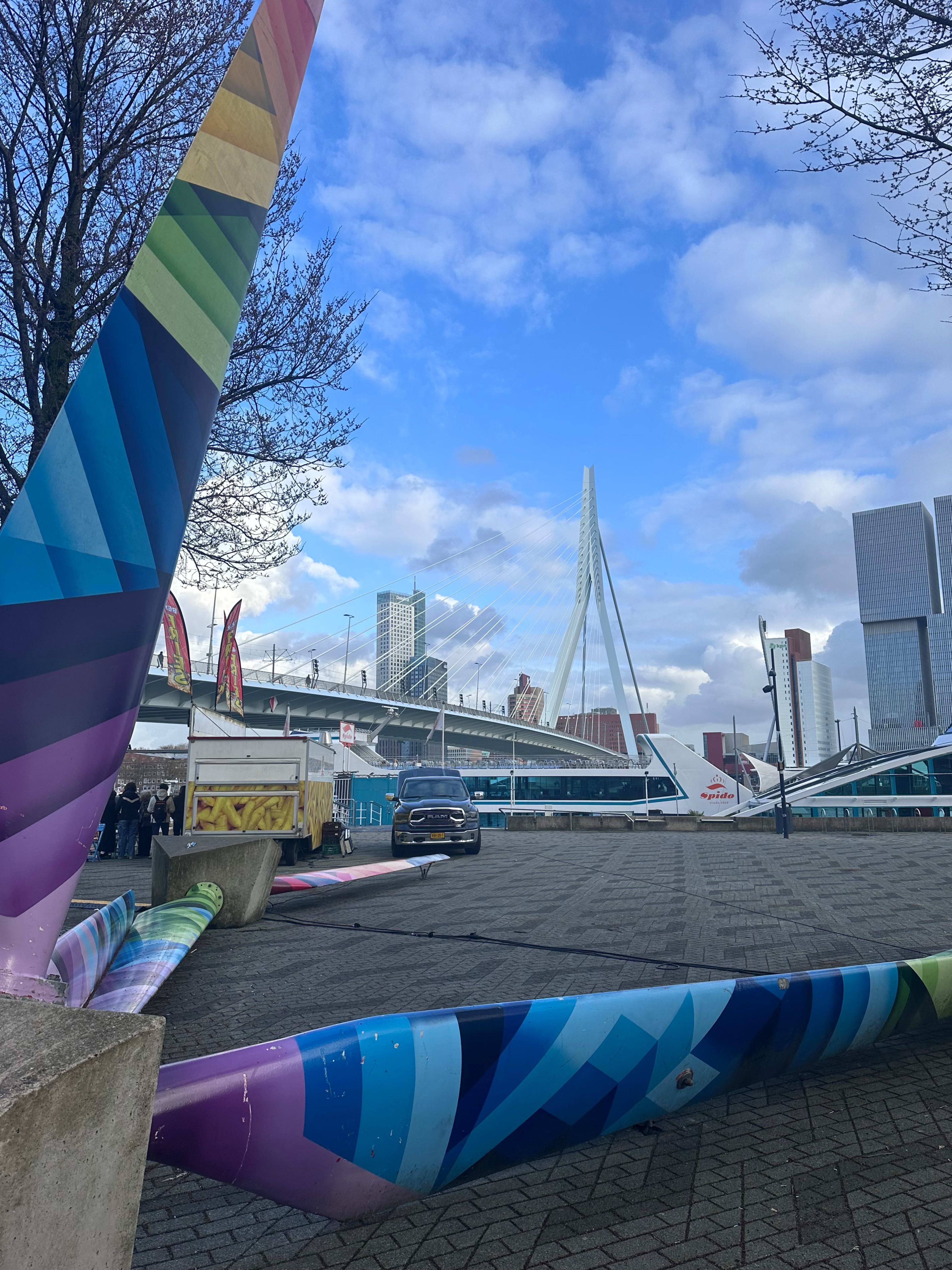
Moving from the peaceful docks of Veerhaven, walk east out of the Veerhaven loop onto the wide riverside path along Willemskade. Keep the Maas River on your right, passing the Spido tour docks with incredible views of the Erasmus Bridge. Just before you pass under the bridge ramp, turn left and follow the pedestrian path straight up the western side of the Leuvehaven basin. You'll walk right into the open-air fleet! It’s a completely flat, breezy 1.4 km (about an 18-minute walk). The open-air harbor park itself is completely free to walk around and photograph! While you need a ticket to go inside the main Maritime Museum building and explore certain interior ship exhibits, wandering the historic docks, looking at the cranes, and soaking in the old-port atmosphere won't cost you a single euro.
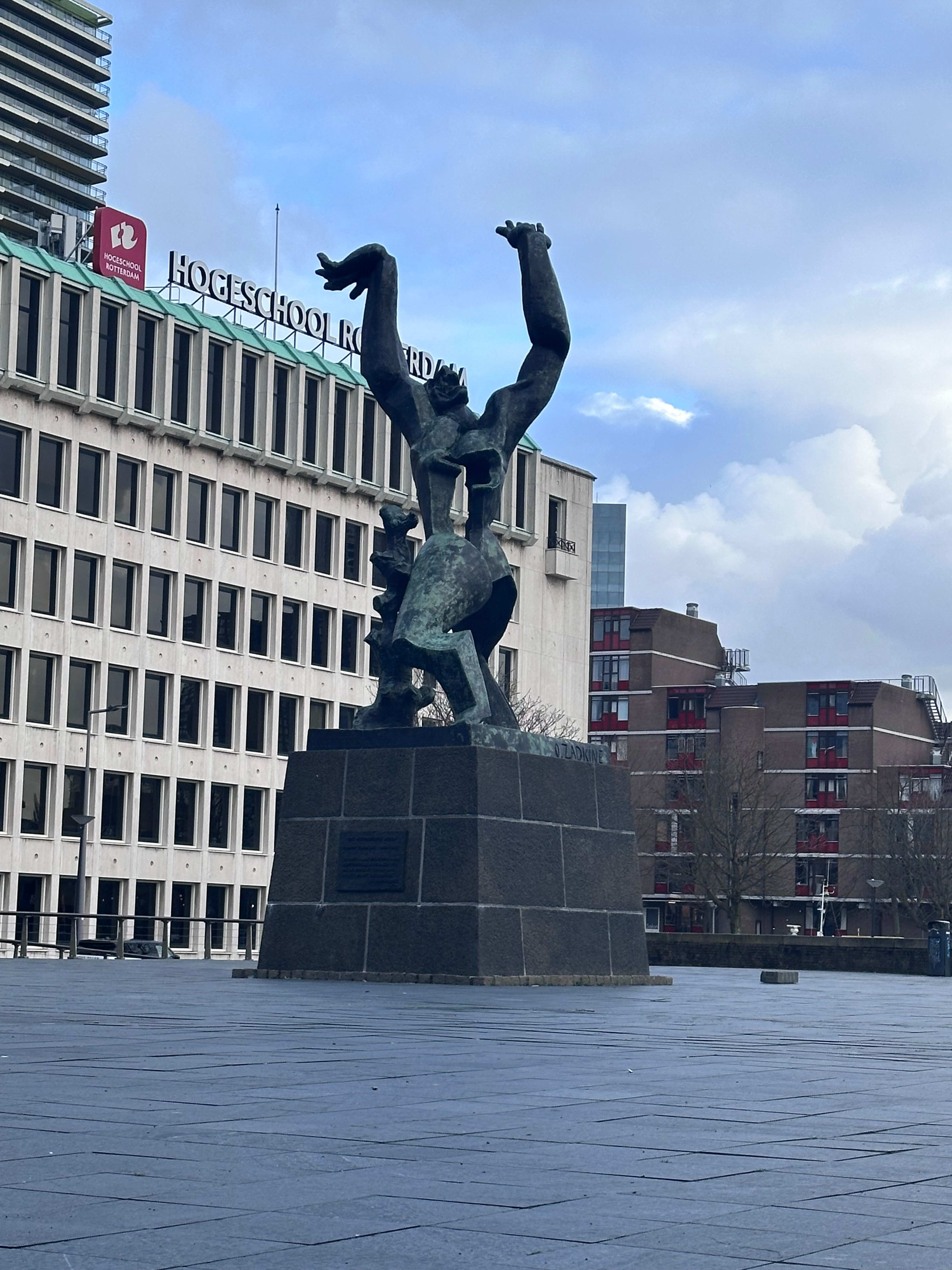
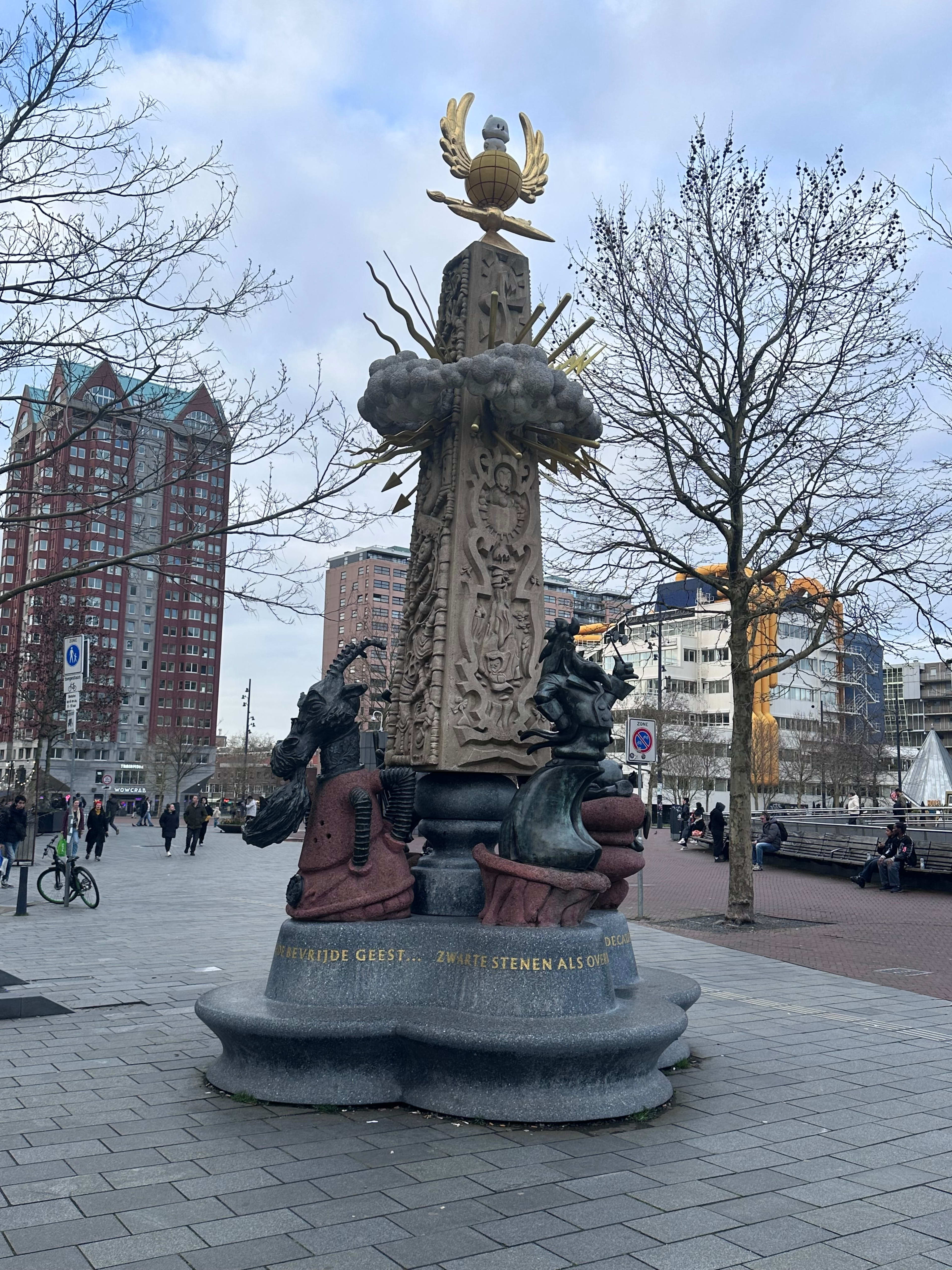
Right on the edge of the museum harbor at Plein 1940, you will come face-to-face with The Destroyed City (De Verwoeste Stad). This striking bronze monument is one of the most powerful and emotional war memorials in all of Europe.
🏗️ Stadsdriehoek: Where Rotterdam’s History Meets Futuristic Architecture
If you want to stand at the exact birthplace of Rotterdam, you need to explore Stadsdriehoek (The City Triangle). This neighborhood is the historic heart of the old city, but also has the experimental architecture on the planet.
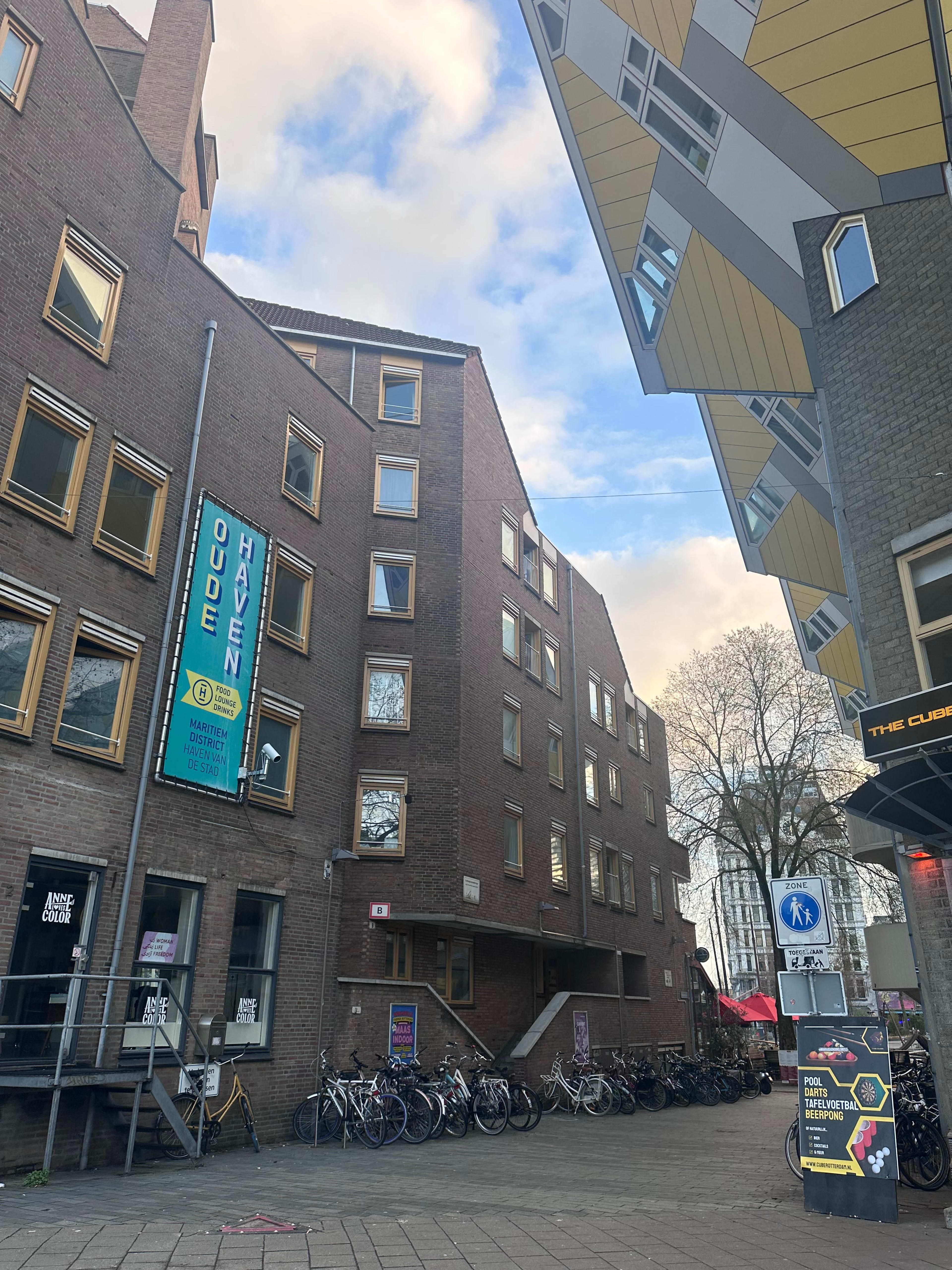
📐 It was almost completely flattened in WWII, walking through Stadsdriehoek feels like strolling through an open-air architectural museum where every single block has a new, gravity-defying building to look at and is deeply connected to the water. The Cube Houses (Kubuswoningen) 🏠 You cannot miss these iconic, bright yellow houses tilted at a bizarre 45-degree angle. They are actually a fully functioning residential community right over a pedestrian bridge!
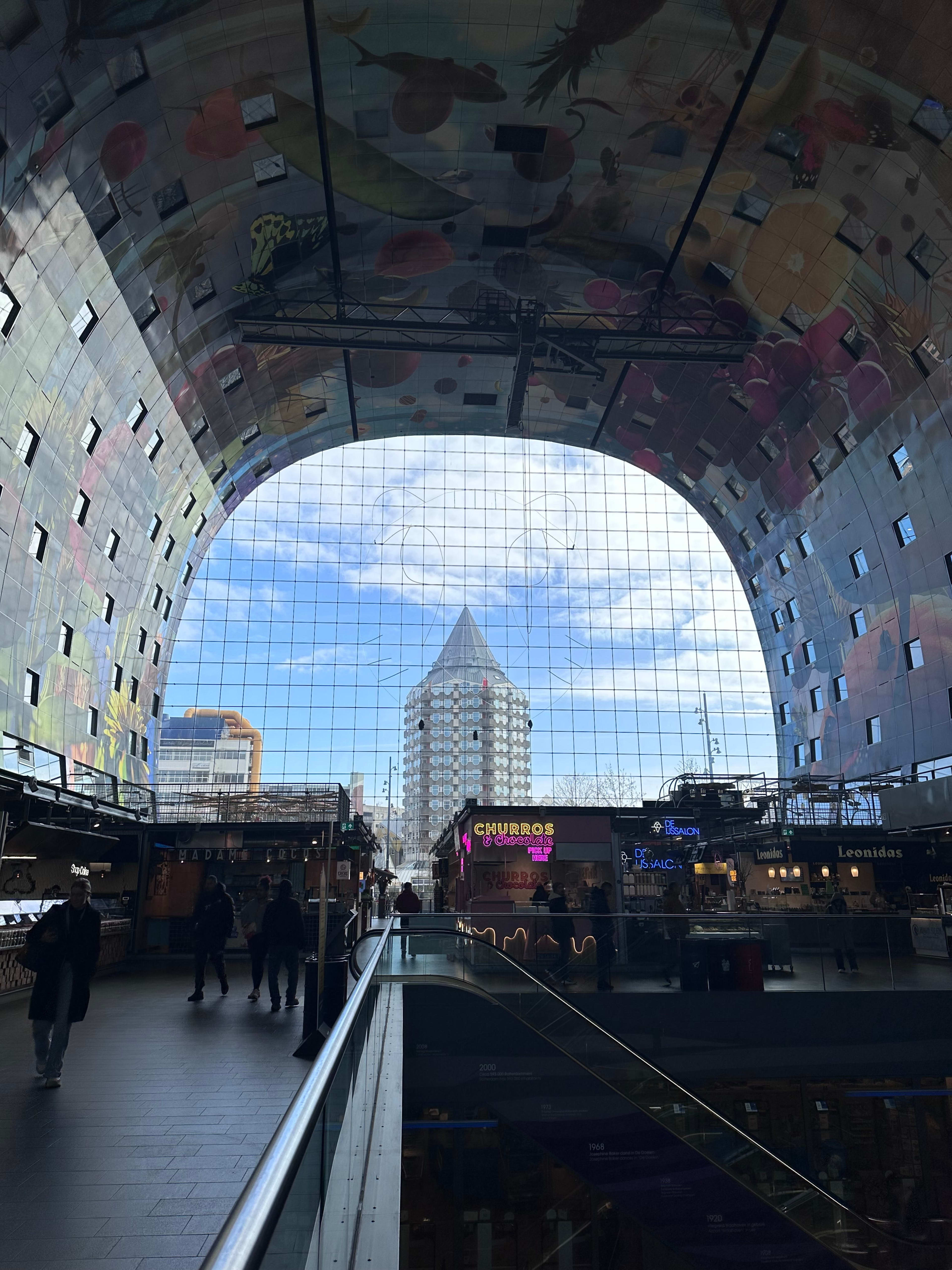
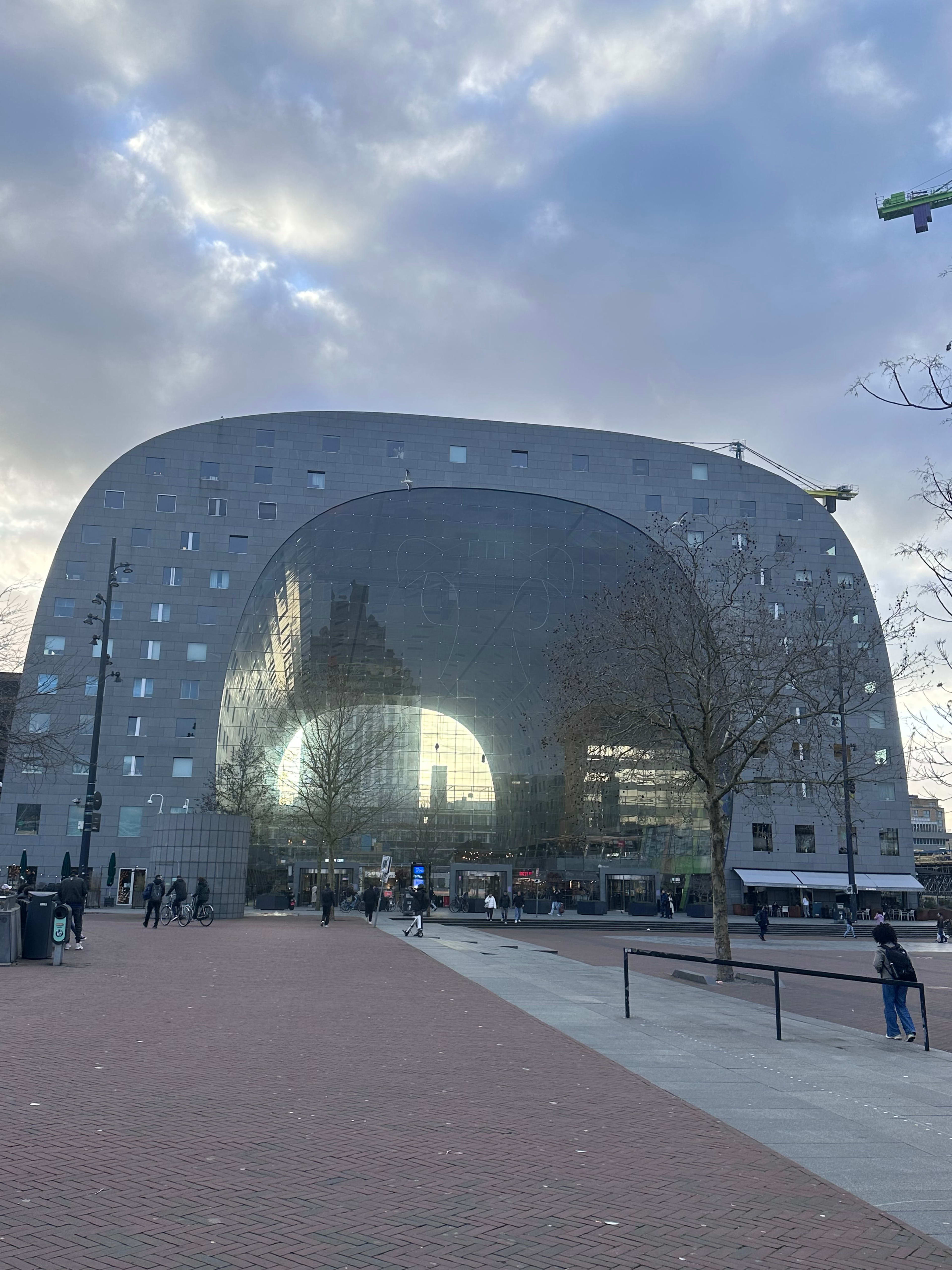
The Blaak Market & Markthal 🥐 Right across the plaza is the Markthal, a mind-blowing, horseshoe-shaped building that combines a massive indoor food hall with residential apartments built right into the curved outer shell. Step inside to grab a fresh, warm Dutch stroopwafel and look up—the entire ceiling is a giant, colorful 3D artwork of fruits, vegetables, and flowers.
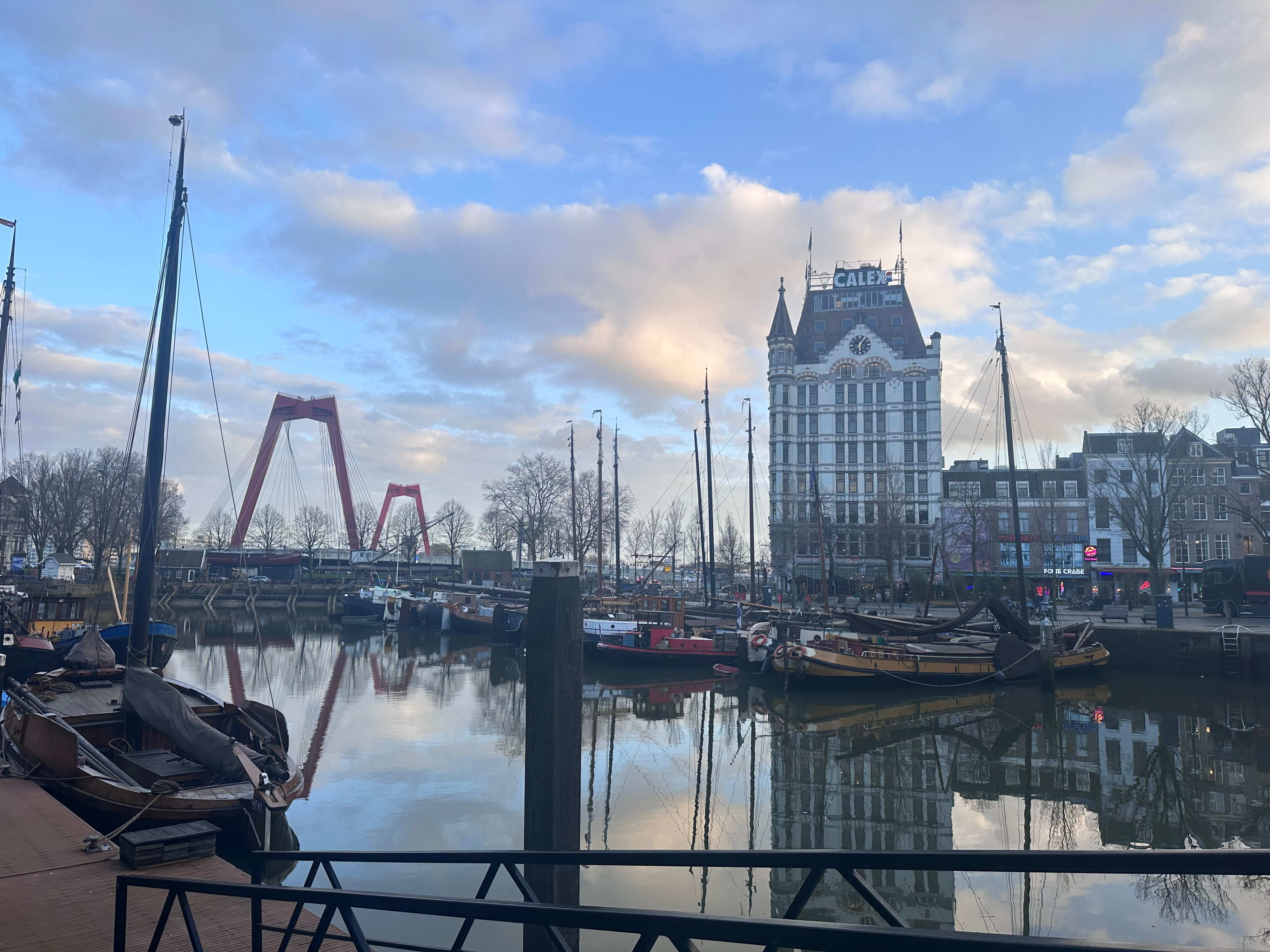
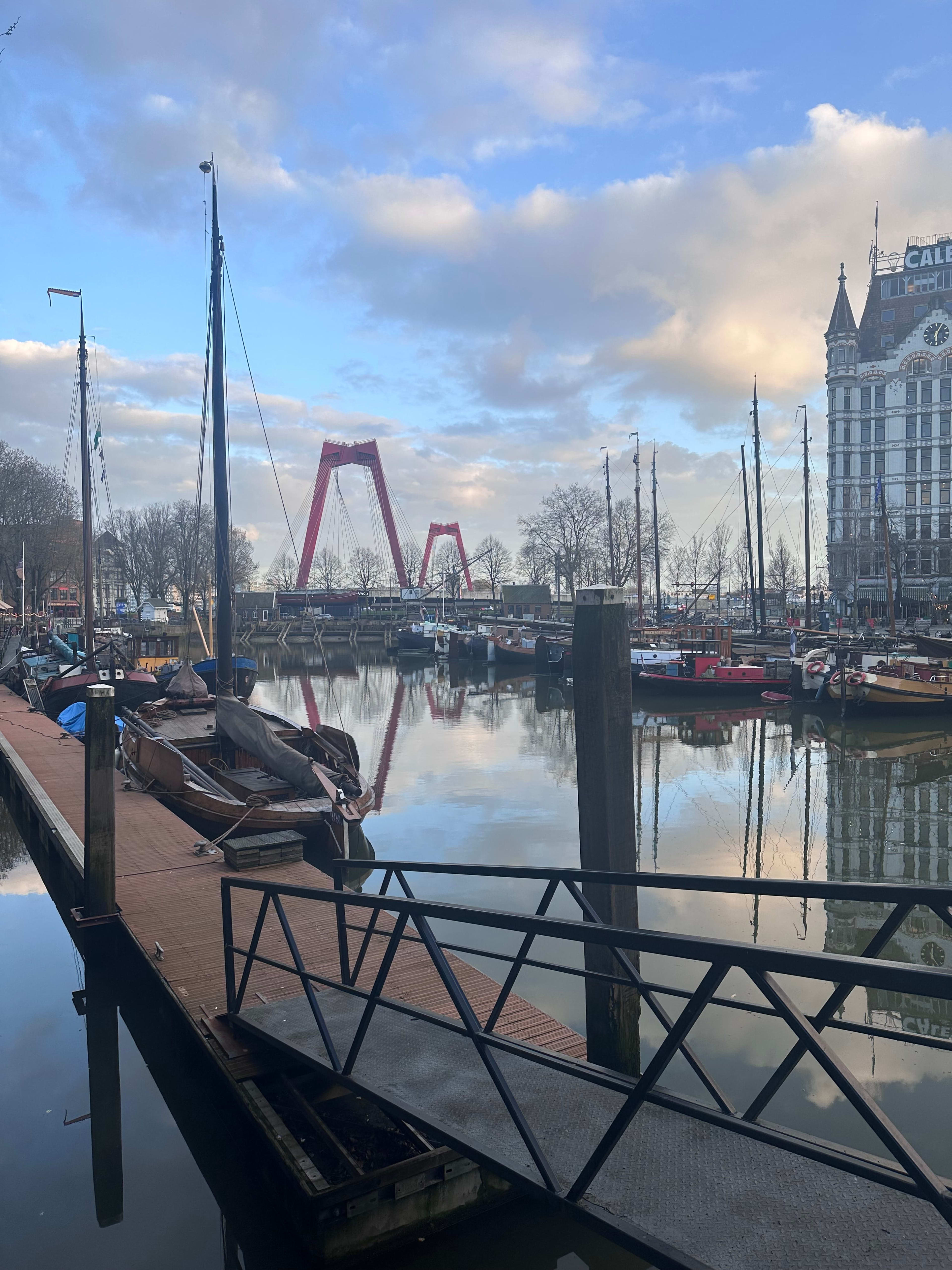
Walk over to the Oude Haven (Old Harbor). This is one of the oldest ports in the city and features the Witte Huis—a gorgeous, 1898 art-nouveau building that was actually Europe’s very first skyscraper. The harbor basin is lined with fantastic waterfront bars and restaurants, making it the perfect local hotspot to sit outside on a wooden deck, have a drink, and look at the historic boats.
🍅 If you can time your visit, head to the massive open-air Blaak Market on a Tuesday or Saturday. It takes over the entire central plaza right outside the Markthal. While the indoor Markthal is gorgeous, the outdoor market is where the locals actually shop. It is packed with rows of fresh cheese wheels, local herring stalls, and incredibly cheap flower vendors. ⛪ For a beautiful moment of historical perspective, stop by the Laurenskerk. It is the only surviving medieval building in Rotterdam’s city center, a 15th-century Gothic church.
🗺️ The Ultimate Rotterdam Walking Route: From Futuristic Flavour to Historic Charm
If you want to experience the absolute best of Rotterdam in a single walk, this route is the holy grail. You'll start at the city’s hyper-modern architectural core, dive straight into its high-energy downtown fashion hub, and end your day in a beautiful 17th-century historic harbor. Total Walking Time: About 50–60 minutes.
After a loop in the indoor food hall, look at the massive, colorful ceiling and grab a warm stroopwafel or some fresh kibbeling (fried fish) to fuel. As you navigate the crowded market plazas here, you might notice local politie (police) officers or handhaving (city wardens) patrolling on bikes or on foot. Rotterdam’s central district is incredibly safe, and the local Stadsdriehoek police team keeps a highly visible, friendly presence to help out tourists and keep the bustling market safe.
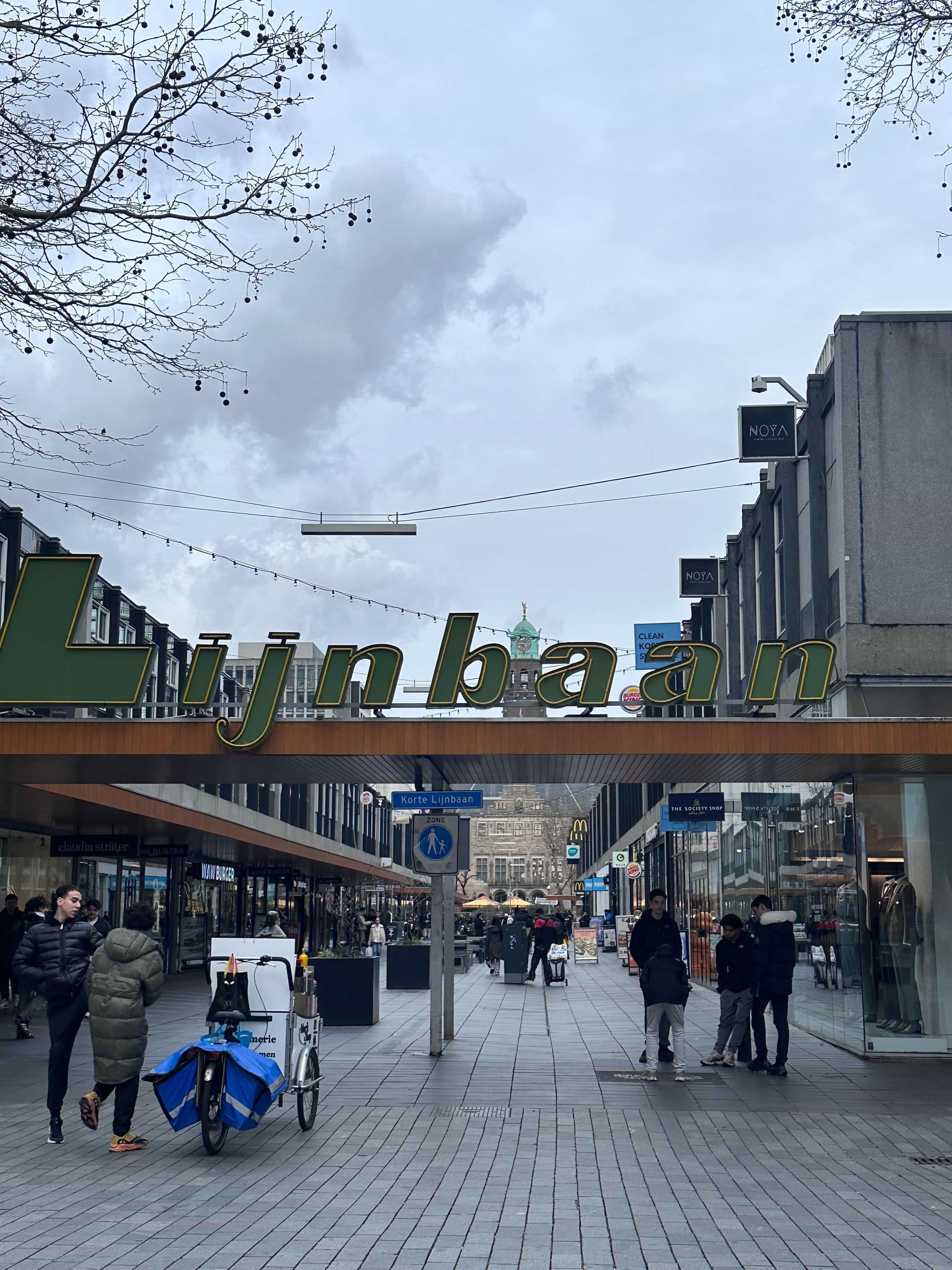
Diving into "Rotterdam Cool" - Within 10 minutes, the atmosphere shifts from architectural wonder to high-energy street culture as you cross into the Cool district. This is the vibrant, beating heart of downtown Rotterdam. Hang a left onto Witte de Withstraat, the most famous cultural street in the city. By day, it’s a leafy, breezy avenue packed with independent art galleries, quirky clothing boutiques, and specialty coffee spots. Keep walking straight down Witte de Withstraat. As you reach the end, cross the beautiful Westersingel canal (keep an eye out for the massive modern sculptures sitting right on the grassy banks!). You'll continue straight onto Eendrachtsstraat and head toward the Nieuwe Binnenweg—a long, lively local street that leads you straight west.
As you follow Nieuwe Binnenweg, you'll experience a beautiful, local side of the city that most hurried tourists miss entirely. You’ll notice the storefronts changing into a fantastic global market. This stretch features tons of shops with Arabic signs, bustling Middle Eastern bakeries pumping out the scent of fresh flatbreads, and hip local cafes. You'll walk right past the Heemraadssingel, a gorgeous, historic park-canal. Take a second to look down the water—the weeping willows dipping into the canal give you a perfect moment of quiet nature right in the middle of the city grid. Soon after, you'll edge past the raw, industrial waterfront of Coolhaven with its artsy, creative energy.
After following the street to the end and crossing the water, you'll suddenly step right into a time machine. Welcome to Delfshaven—one of the precious few pockets of the city that completely survived the WWII bombings. You are instantly greeted by classic 17th-century Dutch canal houses, historic windmills, and old iron drawbridges. The harbor basin is filled with traditional wooden sailing ships, looking exactly like a classic Dutch painting. Find a seat on an outdoor wooden deck at De Pelgrim (a beautiful local brewery housed right next to the historic Pilgrim Fathers Church). Order a locally brewed craft beer, look out over the quiet water, and soak in the rich, maritime history.
1 / 13